

Dry eye symptoms don’t always feel the same throughout the day. You might get through work without noticing much, then feel burning or grittiness settle in around 9 p.m.
Your eyes feel worse at night because tear production slows while you sleep, your tear supply already runs low by bedtime, and dry bedroom air speeds up how quickly moisture evaporates. Sorting out which of those matters most for you can point toward relief that holds through the night.
What Makes Dry Eyes Worse at Night
Every blink spreads a fresh layer of tears across the surface of your eye. You do that thousands of times between breakfast and bedtime, and the film gets thinner as the hours add up. Bedroom air holds less moisture when the furnace runs in winter or the air conditioner runs in summer. Tears evaporate faster in drier air.
Tear production also slows overnight. Your eyes have to work with whatever moisture is on the surface when you close them, and that’s 7 or 8 hours without much of a refill.
Sleeping with Your Eyes Partly Open
Some people don’t close their lids all the way at night, a condition called nocturnal lagophthalmos. Even a narrow gap leaves part of the cornea exposed for hours.
Air moves over that exposed strip and carries moisture with it. Mornings often start with a raw, sandy feeling that settles after a few blinks. And most people have no idea they’re doing it. A partner might mention it first, or your optometrist may notice dryness concentrated along the lower part of your eye during an exam.
Medications That Can Dry Out Your Eyes
Plenty of everyday prescriptions and drugstore products lower how many tears you produce:
- Antihistamines and decongestants taken for allergies or a cold.
- Blood pressure medications, including diuretics.
- Some antidepressants and anti-anxiety medications.
- Acne treatments containing isotretinoin.
Keep taking what you’ve been prescribed. Bring the list to your next eye exam so your optometrist can factor it into your treatment.
Health Conditions Linked to Dry Eye
Thyroid disease and diabetes can both change the volume and the quality of your tears. Diabetes may also reduce corneal sensitivity, which means you blink less often without noticing. Autoimmune conditions like Sjögren’s syndrome affect the glands that produce tears and saliva, so symptoms tend to run through the whole day instead of building only at night.
Hormonal changes around menopause come up often too. Falling estrogen and androgen levels can alter the oil layer of your tear film, which slows evaporation while you sleep.
Screens, Contact Lenses, and Late Nights
Scrolling in bed keeps your eyes fixed on a bright screen at the time of day when your tear film is already thinnest. Your blink rate drops during focused screen use, so fresh tears arrive less often.
Contact lenses add another layer to the problem. They sit inside the tear film and draw on it all day, which can leave your eyes parched by the time you’re brushing your teeth. Take them out an hour or two before bed and give the surface some time to recover.
Signs Your Dry Eyes Peak Overnight
The first few minutes after you wake up tend to leave the clearest clues:
- A burning or gritty feeling as soon as you open your eyes.
- Red, irritated eyes that look tired before the day starts.
- Blurry vision that clears after a few blinks.
- Drops that help for a while, then wear off faster than they used to.
Ways to Make Your Bedroom Easier on Dry Eyes
A few adjustments to the room can change how your eyes feel in the morning:
- Apply a lubricating gel or ointment before bed, since thicker formulas tend to stay put longer than drops.
- Run a humidifier and aim for 40 to 60 percent humidity.
- Point fans, vents, and air conditioners away from your face.
- Try a sleep mask or moisture goggles if you suspect your lids don’t seal all the way.
- Wipe along your lash line with a gentle lid cleanser before you turn in.
Evening Habits That Support Your Tear Film
What you do in the hour before bed can carry over into how you feel the next morning:
- Rest a warm compress over closed eyes for 5 to 10 minutes to help the oil glands in your lids release more freely.
- Put the screens down 30 to 60 minutes before sleep so your blinking can return to its usual rhythm.
- Sip water through the day rather than gulping a glass at bedtime.
When to See an Optometrist
Home care covers a lot of ground, though some symptoms deserve a closer look. Book an exam when you notice:
- Symptoms that stick around for more than a few days.
- Pain, redness that won’t settle, or changes in your vision.
- Eyelids that feel glued shut with mucus in the morning.
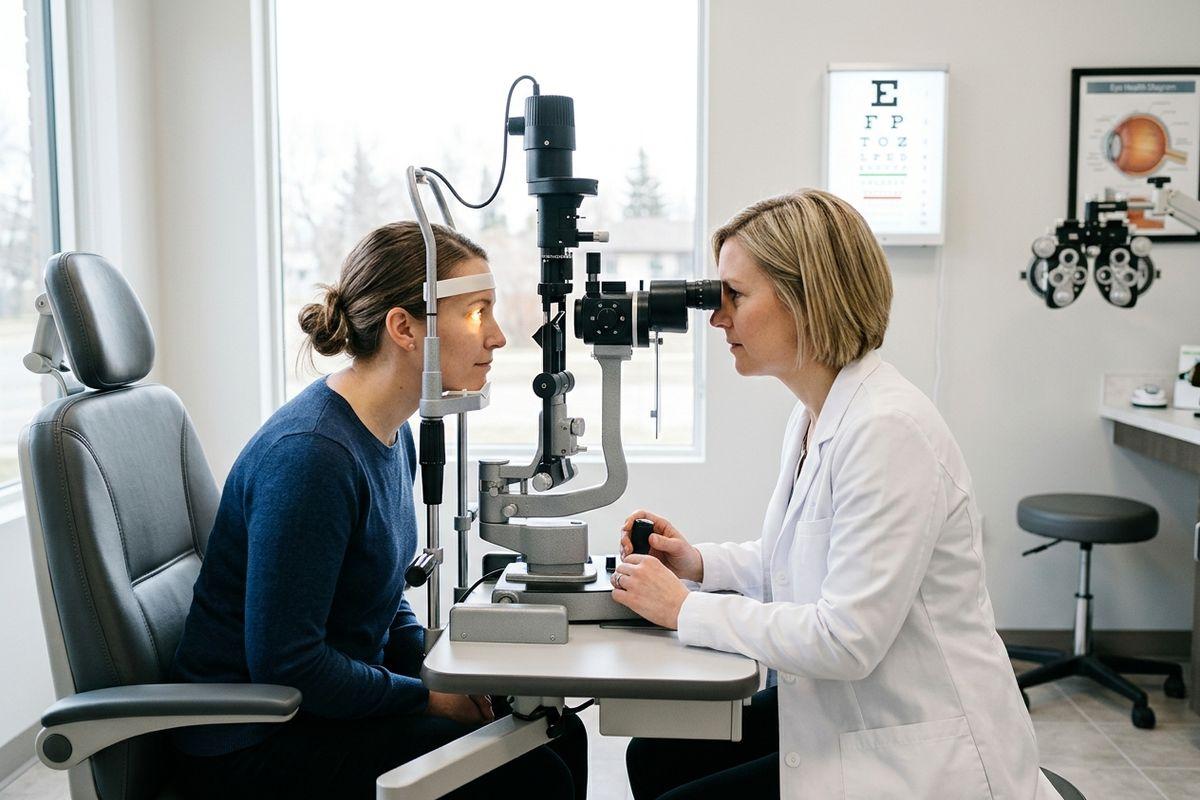
An exam can look past the surface irritation and find the source. We examine your tear film, measure how quickly it breaks up, check the oil glands along your lid margins, and read that alongside your health history.
How Your Eye Care Team Can Help
Nighttime dryness usually responds to a mix of small habit changes and treatment aimed at the underlying cause. Pay attention to when your symptoms hit hardest, and you can leave your appointment with something concrete to work from.
At InVision Eyecare, we pair thorough eye exams with dry eye care built around what’s actually driving your symptoms. Book your appointment today, so we can start working toward calmer evenings and brighter mornings.