
Walk down any pharmacy aisle, and you’ll spot a whole shelf of supplements made just for your eyes. Eye vitamins concentrate nutrients linked to the retina and macula, like lutein and zeaxanthin. A standard multivitamin spreads smaller amounts across dozens of nutrients for general health.
We hear questions about these bottles often during comprehensive eye exams. Eye vitamins can be worth taking if you have certain eye conditions or a diet that’s missing key nutrients, and your optometrist can help you figure out if that includes you. The strongest research comes from people living with certain eye diseases, so that’s a good place to start.
Do Eye Doctors Recommend Supplements?
The honest answer is that it depends on what’s happening with your vision. Some patients gain measurable benefits, while others spend money on pills that do little.
When Supplements May Help
People with age-related macular degeneration (AMD) have the most evidence on their side. AMD damages the macula, the part of your retina that handles sharp central vision, and it’s a leading cause of vision loss in Canadians over 55. Early AMD often doesn’t cause noticeable symptoms, and finding it early may help slow vision loss.
A specific formula called AREDS2 combines lutein, zeaxanthin, vitamin C, vitamin E, zinc, and copper. Large studies, including the AREDS2 clinical trial, found this type of blend can lower the risk of intermediate AMD progressing to the advanced stage. Researchers also removed beta-carotene from the original recipe, since it may raise the risk of lung cancer in people who smoke. Check the label before you buy, because formulas vary from brand to brand.
A supplement can also make sense if bloodwork shows you’re low on a nutrient. The same goes for anyone whose meals regularly skip whole food groups, like people who don’t eat fish or follow a very restrictive diet.
When Eye Vitamins Offer Little Benefit
Some eye concerns don’t respond to a pill at all. Research doesn’t support supplements for a few common ones:
- Glaucoma: This condition damages the optic nerve, and treatment focuses on lowering eye pressure with prescription drops, laser, or surgery.
- Dry eye: Omega-3 fatty acids are sometimes recommended for dry eye, particularly when meibomian gland dysfunction contributes to symptoms. These glands produce the oily layer of the tear film, which helps prevent tears from evaporating too quickly. Omega-3s may support this aspect of tear film health. Your optometrist can help determine whether supplementation is worth considering alongside other treatments.
- Healthy eyes: The AREDS2 trial enrolled people who already had intermediate or advanced AMD, so there’s little evidence these formulas prevent the disease in eyes without AMD.
Key Nutrients for Eye Health
A handful of nutrients play a direct role in how your eyes work. Look for these on the label:
- Lutein and zeaxanthin, which gather in the macula and help filter blue light.
- Vitamin A, which your eyes use to see in dim light. A shortage can lead to night blindness and make driving after dark harder.
- Vitamin C, an antioxidant that may help protect against eye disease.
- Omega-3 fatty acids, which are found in retinal cell membranes and may play a role in tear film health. Importantly, adding omega-3s to the AREDS2 formula did not further reduce AMD progression risk.

Foods That Support Eye Health
Your plate can supply most of these nutrients, along with fibre and other compounds your body uses well. Start with leafy greens like spinach and kale, which carry the same lutein and zeaxanthin you’ll find in eye formulas. Cook them with a little olive oil, since lutein dissolves in fat and your body may absorb more of it that way.
Then add some colour. Here are a few foods worth putting on your grocery list:
- Orange peppers, for lutein, zeaxanthin, and vitamin C.
- Kiwi, which is high in vitamin C.
- Salmon and other fatty fish, for omega-3s.
- Nuts and seeds, which add vitamin E.
- Eggs, since the yolks contain lutein.
Canada’s Food Guide suggests filling half your plate with vegetables and fruit. Try to cut back on heavily processed snacks and sugary foods, which give your eyes very little to work with. What you eat can affect more than your retina, too, since gut health may play a role in dry eye.
Get Personalized Advice on Eye Vitamins
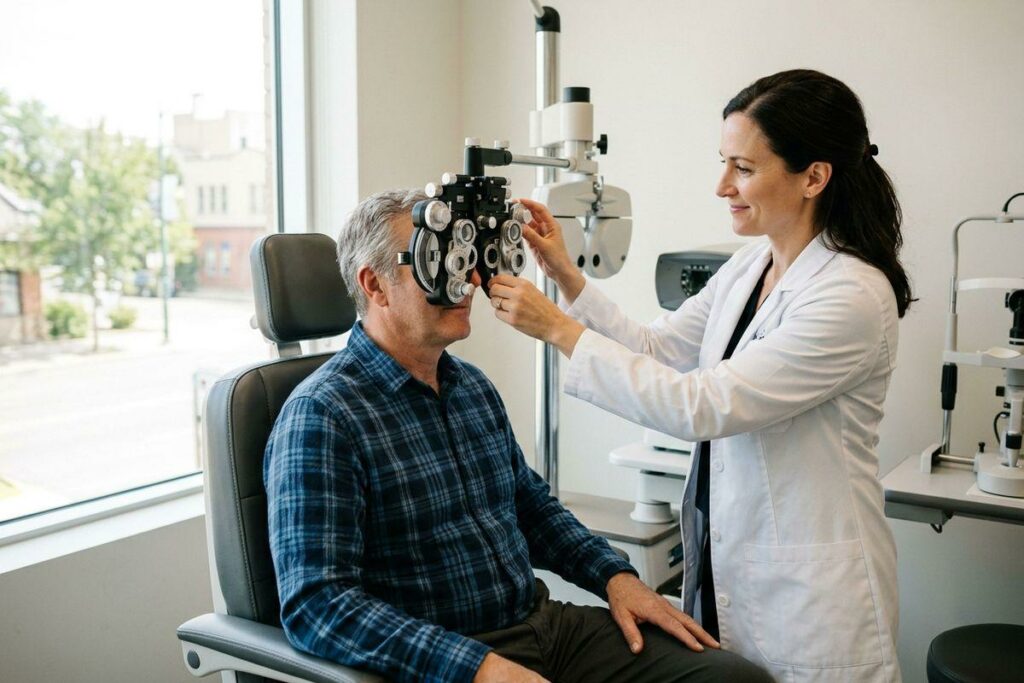
Some formulas contain high doses of certain nutrients, so tell your optometrist about any medications or supplements you already take. During an exam, your optometrist can check your macula for early signs of AMD and talk through your eating habits. From there, you’ll get a clearer sense of whether a supplement fits your routine or whether a few food changes may do the job.
If dryness is your main concern, ask about dry eye treatment options. Feel free to bring your supplement bottle along so we can review the label together.
The team at InVision Eyecare is happy to help you and your family make informed choices about eye health here in Saskatoon. Book an appointment and let’s talk about what your eyes need.