
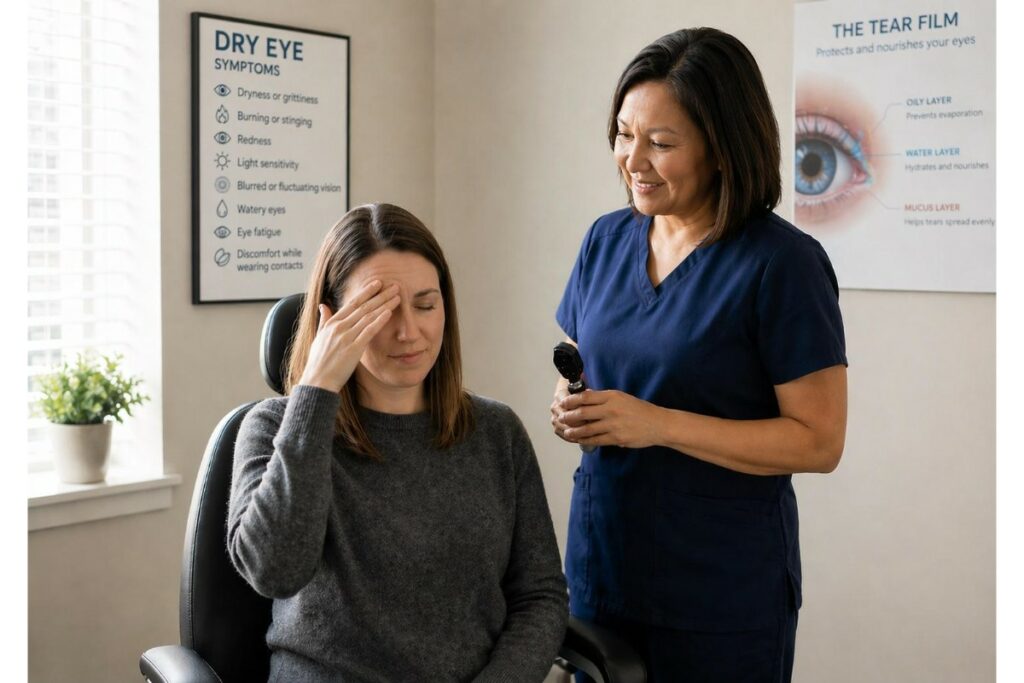
You step outside on a sunny afternoon, and the light feels brighter than it used to. Or you notice that the glare from your screen feels sharper and more irritating than it used to. If this sounds familiar, your eyes may be telling you something important.
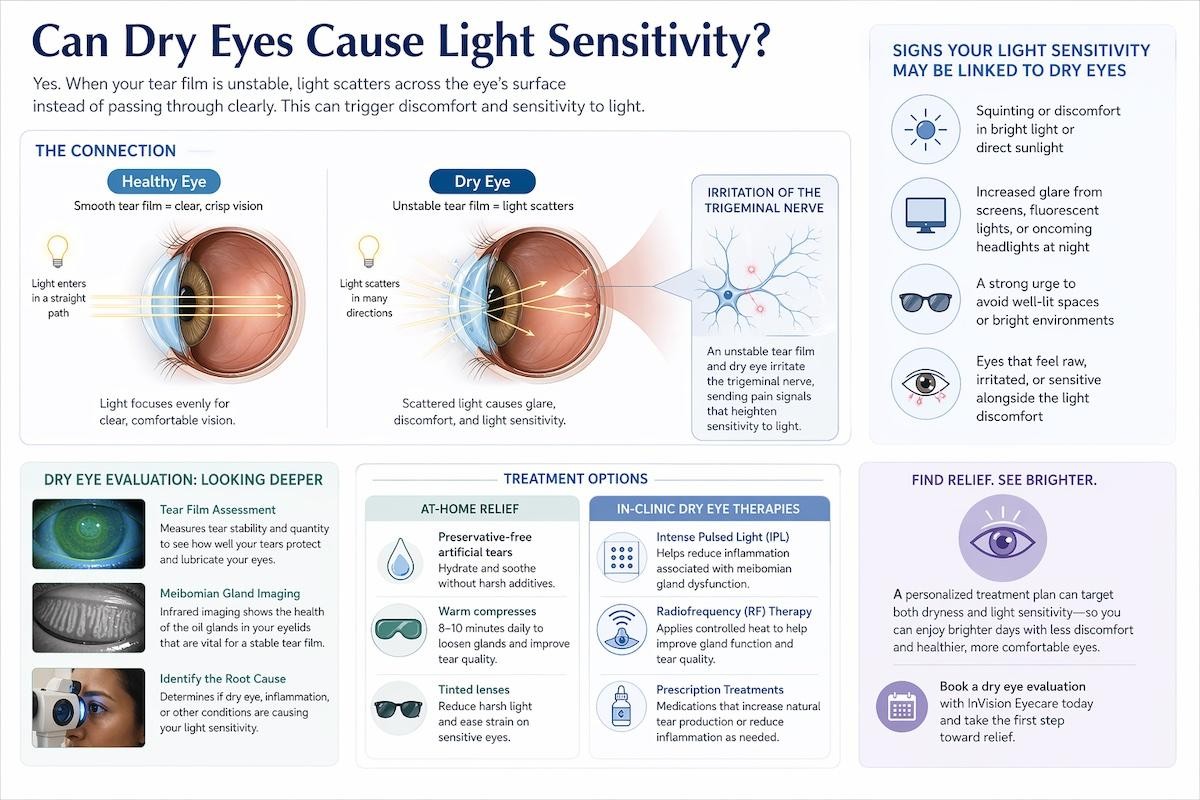
Yes, dry eyes can contribute to light sensitivity because an unstable tear film causes light to scatter across the eye’s surface instead of passing through cleanly. That irregular surface also irritates the trigeminal nerve, which is the nerve responsible for sending pain signals, including the discomfort you feel in bright light.
Signs Your Light Sensitivity May Be Linked to Dry Eyes
Not all light sensitivity looks the same, but certain patterns tend to show up when dry eye is involved. Paying attention to when and how the discomfort happens can help point you in the right direction.
Some signs to watch for include:
- Squinting or discomfort in bright light or direct sunlight
- Increased glare from screens, fluorescent lights, or oncoming headlights at night
- A strong urge to avoid well-lit spaces or bright environments
- Eyes that feel raw or sensitive alongside the light discomfort
Book an eye exam if your light sensitivity appears suddenly or worsens over time. Over-the-counter eye drops may offer short-term comfort, but if they bring little to no relief, you need to look closer at the underlying cause. Seek professional care sooner so you can start working toward actual relief rather than relying on temporary fixes.
How a Dry Eye Evaluation Can Help
A dry eye evaluation goes deeper than a standard eye exam. Your optometrist looks at how stable your tear film is and how much tear fluid your eyes generate, as both factors directly affect how your eyes handle light.
Our team also uses infrared imaging to assess your meibomian glands. These small glands along your eyelid margins produce the oily layer of your tears. When they stop functioning well, your tear film breaks down faster, leaving your eye surface uneven and more vulnerable to light discomfort.
Light sensitivity can come from several different sources, including dry eye, inflammation, or other ocular surface conditions. Treating the wrong cause means your symptoms stay around longer than they need to.
Dry Eye Treatment Options
You have several ways to address your symptoms, ranging from daily habits to professional care:
At-Home Relief
Some simple at-home habits can help support your tear film between appointments. Preservative-free artificial tears are a good starting point because they hydrate the eye surface without the irritating additives found in many standard drops. Using them regularly throughout the day can help reduce that raw, exposed feeling.
A warm moist heat mask applied to closed eyelids for 8-10 minutes can also loosen blocked meibomian glands and improve the quality of your tears. For outdoor light sensitivity, tinted lenses help filter harsh light and reduce the strain on already-irritated eyes.
In-Clinic Dry Eye Treatments
For more persistent or severe cases, in-clinic dry eye therapy offers targeted options that go beyond what at-home care can address. Intense regulated pulsed light therapy, often called IRPL , can help reduce the inflammation linked to meibomian gland dysfunction. Consider Mibothermoflo therapy to help restore gland function by applying controlled heat to the eyelid area.
You may also benefit from prescription drops that boost natural tear production or reduce ongoing inflammation. The right combination of treatments depends on what your eye exam reveals, which is why personalized care makes such a difference.
Find Relief for Sensitive Eyes
Living with light sensitivity and dry, uncomfortable eyes does not have to be your everyday normal. Addressing the root cause of your symptoms can help you enjoy brighter days with far less discomfort.
A personalized plan can target both dryness and light sensitivity together, so you’re not stuck managing one symptom at a time. Ongoing care also supports long-term ocular surface health, which means fewer flare-ups and more comfortable days ahead.
If dry eyes and light sensitivity have been affecting your daily life, reach out to InVision Eyecare to schedule your dry eye evaluation and take the first step toward real relief.