
Your eyes are red, itchy, and burning—and you’re not sure if it’s allergies, dry eye, or both. These two conditions often show up together, and when they do, they tend to make each other harder to manage.
Yes, allergies can make dry eyes worse. If you already have dry eye, allergy season can push your symptoms into overdrive. That’s why, at InVision Eye Care, we offer thorough dry eye diagnostics to help identify what’s driving your discomfort.
The Link Between Allergies & Dry Eyes
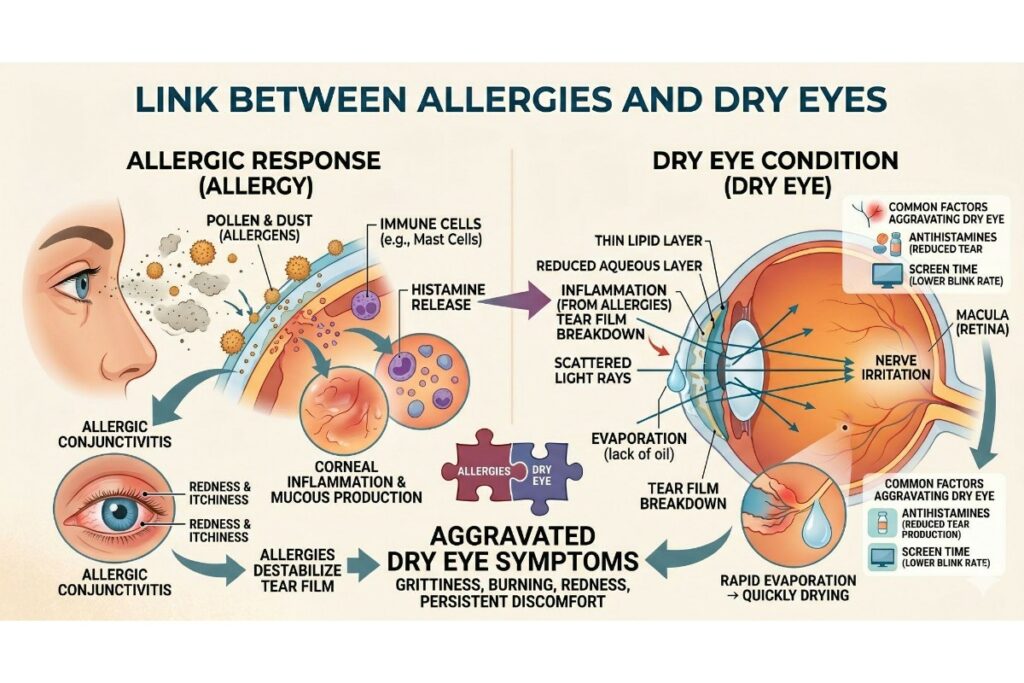
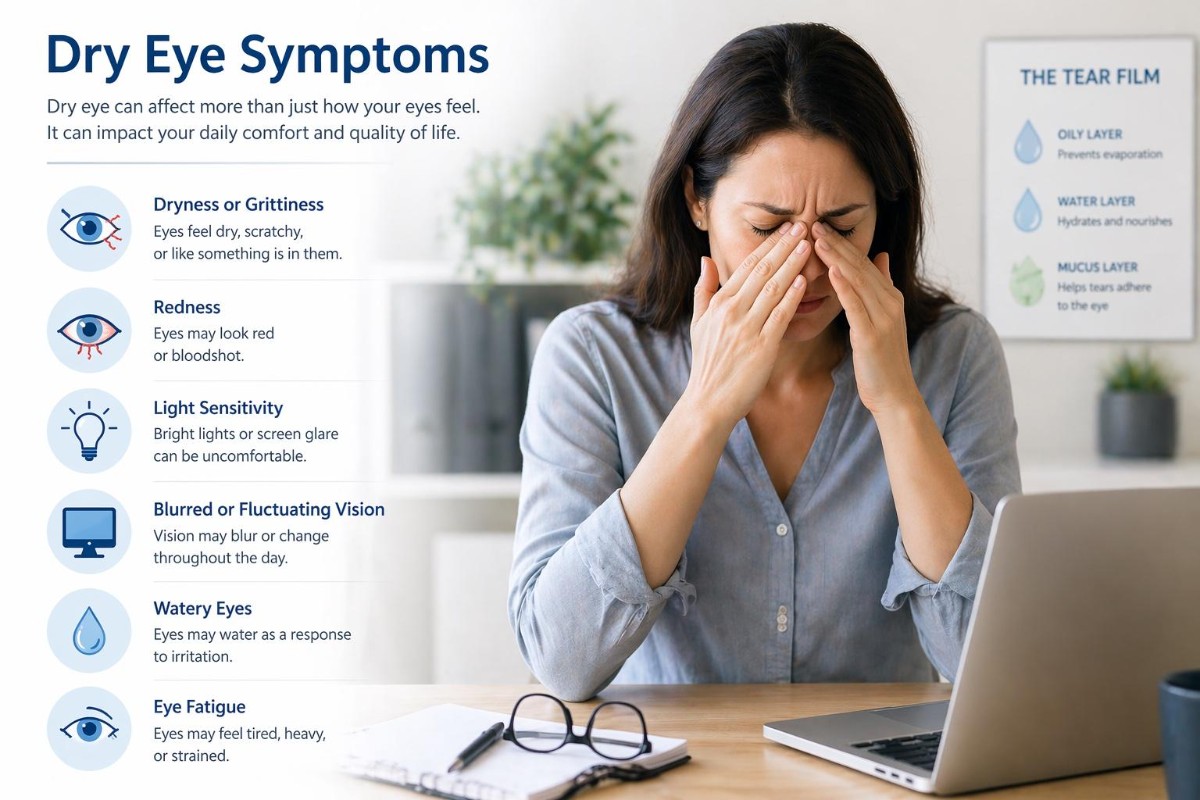
When allergens like pollen or dust land on your eyes, they set off an inflammatory response. This inflammation disrupts the balance of your tear film, which is the thin protective layer that keeps your eyes comfortable. Once the tear film is destabilized, dryness and irritation quickly follow.
Here’s something that surprises a lot of people: the watery eyes that you get from allergies don’t actually help with dry eyes. This is because allergic tears lack the oils needed to keep your eyes moist, so they evaporate too quickly to be of any help.
To learn more about how a disrupted tear film affects your sight, see how dry eye can lead to blurry vision.
Symptoms of Allergy-Related Dry Eye
Signs Your Allergies Are Affecting Your Eyes
It can be hard to separate allergy symptoms from dry eye symptoms. Some of the most common signs that allergies are affecting your eyes include:
- Redness, itchiness, and a burning sensation
- A gritty or foreign body feeling, like something’s stuck in your eye
- Watery eyes followed by stretches of dryness
The cycle of watery-then-dry is a telling pattern. Your eyes produce reflex tears in response to irritation, but because those tears evaporate quickly, dryness returns shortly after.
Dry Eye vs. Allergies — How to Tell the Difference
Knowing which condition you’re dealing with can help you find relief. Sneezing, a runny nose, and nasal congestion alongside eye-related symptoms tends to point toward allergies. If you’re mostly dealing with burning and grittiness—without nasal symptoms—dry eye is more likely the main culprit.
Of course, you can also have both conditions at the same time, which is why symptoms can be so hard to pin down.
What Makes Dry Eye Suddenly Worse
Common Factors Beyond Seasonal Allergies
Allergies aren’t the only thing that can make your dry eye symptoms worse. A few other factors are worth paying attention to:
- Antihistamines (for allergy relief) can reduce tear production over time, making dryness worse even as they ease sneezing
- Increased screen time during allergy season reduces your blink rate, which speeds up tear evaporation
- Wind and dry outdoor air pull moisture from your eyes faster than you’d expect
It’s often a combination of these factors working together that makes symptoms feel sudden or intense. Blinking more frequently can offer short-term relief during screen-heavy days, though this works best alongside a broader approach to managing dry eye.
Seasonal Patterns Worth Noting
Spring tends to bring peak pollen counts, and for many people, that’s when eye discomfort peaks. But allergy season isn’t the only time of year your eyes can feel bothered. Winter indoor heating pulls moisture from the air, leaving your eyes drier even when pollen counts are low. Recognising these seasonal patterns can help you get ahead of symptoms before they build.
Simple Ways to Reduce Allergy-Driven Dry Eye
At-Home Adjustments That Help
A few straightforward changes at home can make a real difference. Running a humidifier indoors during allergy season helps keep the air moist, which reduces how fast your tears evaporate. On high-pollen days, wearing wraparound sunglasses outside creates a physical barrier between your eyes and the allergens in the air.
These aren’t fixes on their own, but they can take some of the daily pressure off your eyes while you work on finding longer-term relief.
A Word on Antihistamines & Eye Drops
If you take antihistamines for allergy relief, it’s worth talking to a doctor about how they may be affecting your tear production. That trade-off—less sneezing, more dryness—isn’t always obvious until symptoms get uncomfortable. Artificial tears can help by flushing allergens from the eye’s surface and adding short-term moisture, though they work best as part of a broader plan rather than as a standalone solution.
When to See a Dry Eye Clinic in Saskatoon
Some situations call for more than what a drugstore shelf can offer. It may be time to visit a dry eye clinic in Saskatoon if:
- Over-the-counter drops no longer give you enough relief
- Your symptoms persist outside of allergy season
- You’re not sure whether allergies, dry eye, or both are driving your discomfort
A Saskatoon dry eye clinic can assess your tear film directly by looking at the quality, stability, and composition of your tears. This kind of targeted assessment can make a big difference when general remedies aren’t cutting it anymore.
Our team at InVision Eye Care also offers a range of dry eye treatment options, including therapies that go well beyond artificial tears, such as IPL treatment for dry eyes.
At InVision Eye Care, we offer thorough dry eye diagnostics and personalised treatment options for patients dealing with persistent or allergy-related dry eye. If your symptoms are affecting your daily comfort, schedule a dry eye evaluation as a practical next step toward feeling better.