

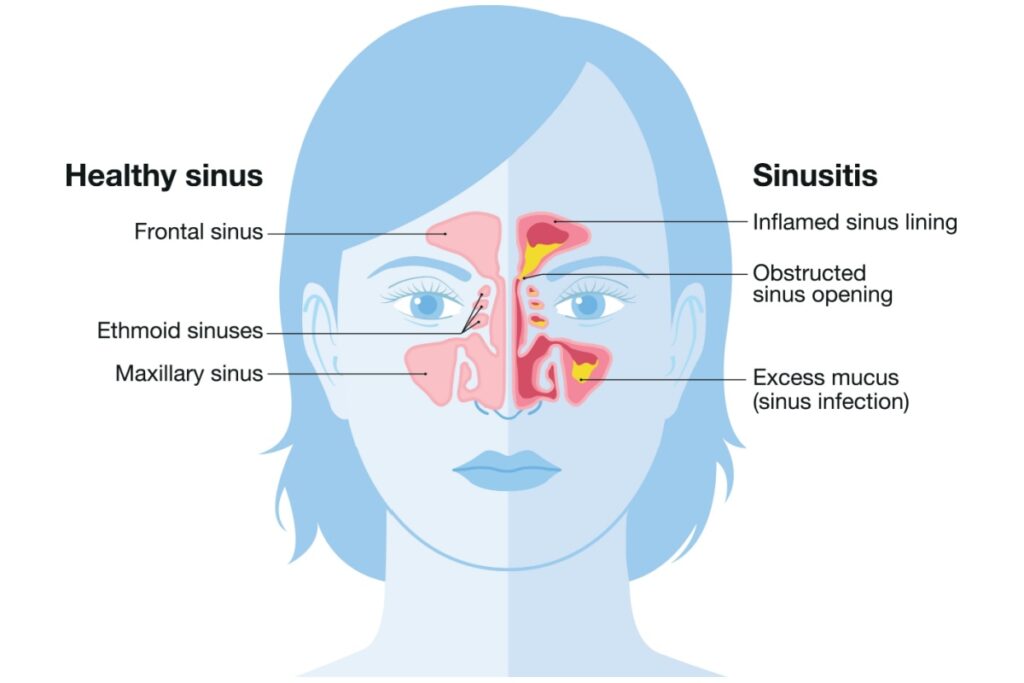
When your sinuses feel congested and your eyes become puffy or irritated, it’s natural to wonder if the two are connected. At InVision Eyecare, we frequently see patients experiencing both sinus pressure and eye discomfort, and in many cases, the symptoms are closely linked.
Yes, a sinus infection can definitely affect your eyes, causing symptoms like swelling, pressure, dryness, and irritation. Your sinuses and eyes share close anatomical connections, which means problems in one area often impact the other.
How Your Sinuses & Eyes Connect
The Shared Anatomy Between Sinuses & Eyes
Your sinuses sit right next to your eye sockets, separated by thin bone walls. The maxillary sinuses rest just below your eyes, while the ethmoid sinuses sit between your eyes and nose.
These spaces share blood vessels, nerves, and drainage pathways. When your sinuses become inflamed, the swelling and pressure can easily spread to nearby eye tissues.
Why Sinus Problems Spread to Your Eyes
Sinus infections create inflammation that blocks normal drainage. This backup of fluid and pressure affects the delicate tissues around your eyes.
The same nerves that control your sinuses also influence tear production and eye comfort. When these nerves become irritated by sinus inflammation, your eyes react with their own set of uncomfortable symptoms.
Eye Symptoms You Might Notice During Sinus Infections
Common Eye Signs of Sinus Trouble
Sinus infections can trigger several eye-related symptoms that make you feel miserable:
- Puffy, swollen eyelids
- Watery or teary eyes
- Eye pressure or pain
- Blurred vision
- Red, irritated eyes
- Dark circles under your eyes
These symptoms often feel worse in the morning and can change throughout the day as sinus pressure shifts. If you notice blurry vision from dry eyes, this could be directly related to how your sinus inflammation is affecting your tear film.
When Eye Symptoms Need Attention
Most sinus-related eye symptoms improve as your infection clears. However, you should seek care if you experience severe eye pain, sudden vision changes, or symptoms that worsen despite treatment.
Persistent eye irritation after your sinus infection resolves might indicate ongoing inflammation or dry eye issues that need separate attention. Consider seeking emergency eye care if symptoms become severe or concerning.
Dry Eye Therapy & Sinus-Related Eye Problems
How Sinus Issues Trigger Dry Eyes
Sinus infections disrupt your natural tear production and drainage system. Inflammation can block the tiny ducts that carry tears away from your eyes, leading to either excessive tearing or dry, scratchy sensations.
The medications you take for sinus relief — like decongestants and antihistamines — can also reduce tear production. This creates a cycle where treating one problem makes another worse. Understanding dry eye conditions can help you recognize when sinus-related inflammation is affecting your eyes.

Treatment Options for Sinus-Related Dry Eyes
During sinus infections, inflammation and certain medications can interfere with your tear production, leading to temporary dryness or irritation. To keep your eyes comfortable, we often recommend preservative-free artificial tears that add gentle hydration without harsh ingredients.
If dry eye symptoms persist after your sinus infection resolves, our dry eye treatment options at InVision Eyecare can help restore moisture balance and improve long-term comfort. These therapies support healthy tear film function and reduce the lingering irritation that sinus inflammation can leave behind.
Comprehensive Eye Exams Can Reveal Sinus Connections
What We Look for During Your Eye Exam
During comprehensive eye exams, we examine the tissues around your eyes for signs of sinus-related inflammation. Swollen eyelids, enlarged blood vessels, and changes in tear production all provide clues about sinus involvement.
We also check your tear film quality and eye surface health. Chronic sinus issues can create long-term changes that affect your comfort and vision even when you feel well. Regular eye exams help us monitor these changes over time.
How Eye Health Reflects Your Overall Health
Your eyes act like windows into your body’s health. We can often spot signs of systemic inflammation, allergies, or chronic conditions during routine eye care.
This whole-body approach helps us provide better care and catch problems early. Sometimes eye symptoms are the first sign that something else needs attention, similar to how gut health impacts dry eyes through inflammatory pathways.
Managing Eye Symptoms While Treating Sinus Problems
Immediate Relief Methods You Can Try
Cool compresses can reduce eyelid swelling and provide comfort during sinus flares. Apply a clean, damp cloth to closed eyes for 10-15 minutes several times daily.
Stay hydrated and use a humidifier to keep your eyes and sinuses moist. Dry air makes both conditions worse, especially during Saskatchewan’s cold months. Learn more about using humidifiers for dry eyes to maximize comfort during recovery.
Long-Term Eye Care During Sinus Recovery
Avoid rubbing your eyes, even when they feel itchy or irritated. This can introduce bacteria and worsen inflammation in already sensitive tissues.
If you wear contact lenses, consider switching to glasses temporarily. Your eyes need extra moisture and healing time during sinus infections, and contacts can interfere with recovery.
If you’re experiencing eye symptoms alongside sinus problems, schedule an appointment with InVision Eye Care in Saskatoon to determine the connection and receive appropriate treatment.
Contact us for a comprehensive eye exam and get the relief you need for both your eyes and overall comfort.